✅ Approval Flows
When a new component or an update is proposed, it does not immediately enter the main library. Instead, it journeys through a carefully structured series of Approval Flows. These flows act as guardrails that preserve quality, scalability, and accessibility at every stage. They are more than just administrative checkpoints; they are the invisible operating system that ensures every contribution fits seamlessly into the whole.
Each step has its own purpose and owner. Moving through these flows gives contributors clarity and confidence. Reviewers know exactly when to step in, and leads can see progress without chasing updates. This fosters trust, efficiency, and shared responsibility.
Visualizing the Flow
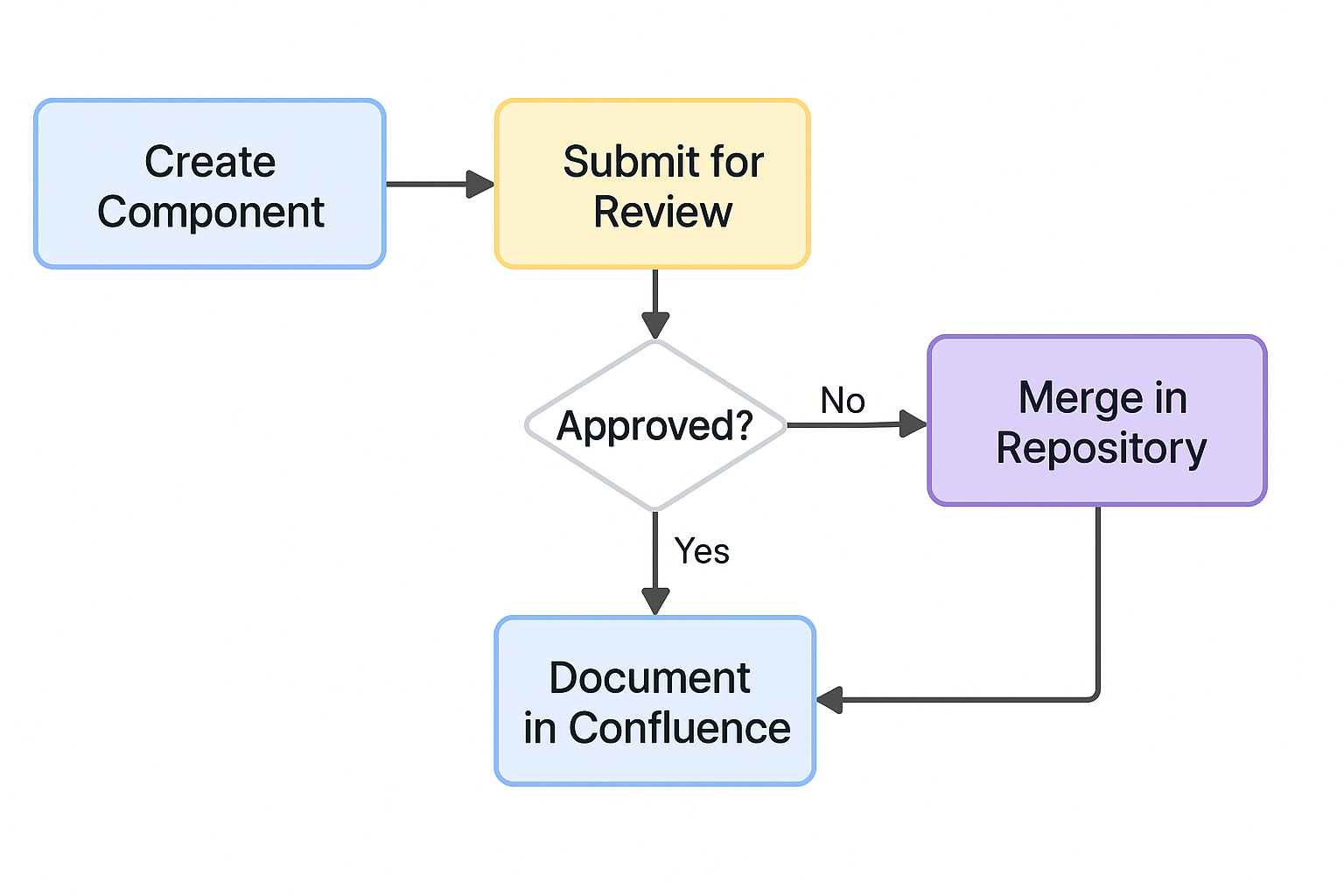
The diagram above illustrates the journey of a single submission. A contributor begins with a draft, then the work moves through review, design validation, accessibility checks, and final engineering sign off. At each step, decisions are documented, creating an audit trail that strengthens the entire system.
Think of this as a guided sequence of checkpoints. At each checkpoint you either progress forward or loop back to refine your work. This reduces friction later and ensures that only polished, well‑governed components make it into the library.
Collaboration at a Glance
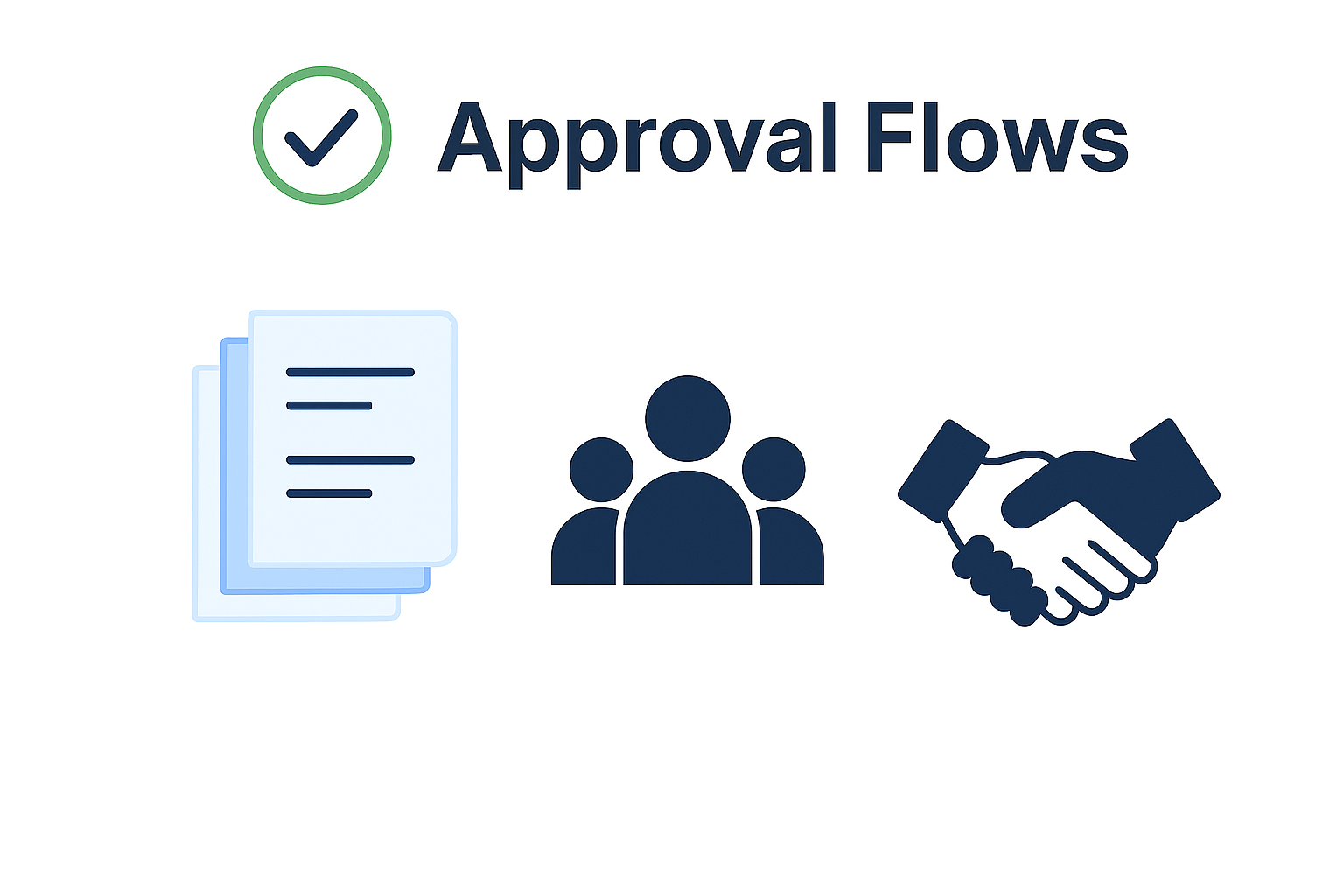
The image above offers a simplified view of the three pillars that drive these Approval Flows. Collaboration ensures that contributors and reviewers stay aligned. Documentation captures every decision in a trusted source of truth. Process binds everything together, ensuring contributions move forward with clarity and purpose. This figure is not a step‑by‑step map but a reminder of the values that keep the workflow healthy as the system scales.
Having this conceptual figure reinforces that approval is not only about review gates. It is about people working together, capturing knowledge, and following a process that sustains long‑term growth.
Core Stages in Detail
With these principles in mind, let’s break down each stage in detail so you understand exactly how a component progresses.
- ☁️Draft Submission, capturing intent and technical details before anything is built
- ☁️Initial Review, verifying that no duplicates exist and patterns are respected
- ☁️Design Validation, confirming visual tokens and responsive rules are followed
- ☁️Accessibility Review, ensuring universal access and inclusive design standards
- ☁️Final Engineering Sign Off, approving implementation quality before merge
Each stage functions as a protective layer. The earlier you catch misalignments, the less rework you face later. Design validation, for instance, prevents token drift that can ripple across the system. Accessibility review ensures compliance before launch, avoiding costly fixes down the road.
Final engineering sign off acts as the gatekeeper for code quality and maintainability. This guarantees that every merge strengthens the foundation instead of introducing fragile or undocumented logic.
Quick Reference Steps
- Prepare your component details with clarity before submission
- Use Confluence to log design choices and technical notes
- Progress through each approval gate with documented feedback
- Loop back if needed and resubmit when ready
- Celebrate once engineering sign off is complete
Recap
The Approval Flows page is not just a checklist. It represents a mindset of iterative improvement, collaboration, and discipline. Each step is a safeguard and a learning opportunity. When you follow these flows, you contribute to a system that evolves gracefully and remains dependable over time.
By adopting these practices you reduce future errors, save time, and deliver components that are ready to scale. Instead of rushed or undocumented changes, you create polished contributions that become part of a unified ecosystem. Mastering these flows also prepares you for the next section, where you will see how documentation remains synchronized through Connected Docs.
View in Confluence
For the complete, live version of this Approval Flow with embedded comments and assets, visit it directly in Confluence:
View Approval Flow in Confluence
What’s Next
You now have a complete view of the Approval Flows and how they safeguard every contribution. The next step is to explore the Connected Docs section. In that section you will learn how approved components remain synchronized across Confluence, Storybook, and MDX files, ensuring documentation and implementation never drift apart.
Continue to Connected Docs →