🗂️ Versioning Strategy
Why Versioning Exists in Design Systems
Versioning is the governance layer of your design system. It defines how changes are introduced, how updates cascade, and how teams avoid regressions as the system evolves. Without a versioning strategy, even small improvements can introduce instability, reduce trust, and create visual inconsistencies across platforms.
Design systems often begin as isolated tools. Once adopted across multiple brands and teams, they transform into infrastructure. Infrastructure needs visibility and traceability. Whether you are updating a token, releasing a component variant, or rolling out an accessibility enhancement, the system should always answer questions like: what changed, why it changed, and how to roll back if needed.
Versioning is how you provide those answers. It creates a shared language between everyone who builds or consumes the system. It enables controlled rollouts, structured deprecations, and safe experimentation. Most importantly, it prevents gradual design drift by enforcing alignment between design intent and real implementation.
Semantic Versioning and Its Purpose
The most widely adopted method for design systems is semantic versioning. It breaks releases into major, minor, and patch categories. These categories are not just labels, they are commitments that communicate the impact and intent behind every change.
Major means breaking changes such as a removed token or a structural shift in a component.
Minor means backward compatible enhancements such as a new token, a new optional prop, or an added state.
Patch means a small, non‑breaking improvement such as renaming a token for clarity or fixing a spacing inconsistency.
Semantic versioning allows teams to see at a glance whether a release will require refactoring, simple adoption, or no action at all. A minor adjustment to a border radius can affect many screens, so clear communication at this level avoids surprises during integration.
The Token Lifecycle
Tokens form the DNA of your design system, and like any DNA they evolve over time. Understanding their lifecycle from creation to retirement is critical for sustainable growth. Each phase of this lifecycle should be documented, traceable, and reversible.
Figure 1. A lifecycle flow that illustrates how tokens progress through definition, release, updates, and deprecation.
Visualizing token lifecycles builds clarity. When contributors see where a token is in its evolution, they understand whether it is safe to use, should be migrated, or needs further review. This approach reduces uncertainty and improves adoption across teams.
Tracing Token Evolution
Tokens are rarely static. As branding evolves or new platforms are introduced, tokens often branch or mutate. Tracking these changes through lineage diagrams allows your team to follow the history of every design decision and see how values adapt over time.
Figure 2. A lineage view showing how brand colors evolved across versions and themes.
A lineage record prevents accidental reuse of outdated tokens and clarifies migration paths. Instead of relying on institutional memory, you have visible documentation of each decision and its impact.
Deprecation as a Planned Phase
Deprecated Token ➜ Replacement
This update preserves legacy support, while nudging all new usage toward the replacement.
Figure 3. A deprecated token clearly marked with its replacement to guide migration.
Deprecation is not simply removal. It is an intentional phase where tokens are marked, documented, and often visually styled to indicate that they should not be used in new work.
By integrating deprecation warnings into linters and build processes, teams receive proactive guidance. This turns deprecation into an opportunity to educate and align rather than a last‑minute scramble.
Effective deprecation strategies show contributors not only what to stop using, but also what to use instead. This keeps work moving forward while reducing technical and visual debt.
Versioning Across Layers
Tokens do not exist in isolation. They are consumed by components, which are then styled by themes. A mature system versions each of these layers independently while still tracking their connections.
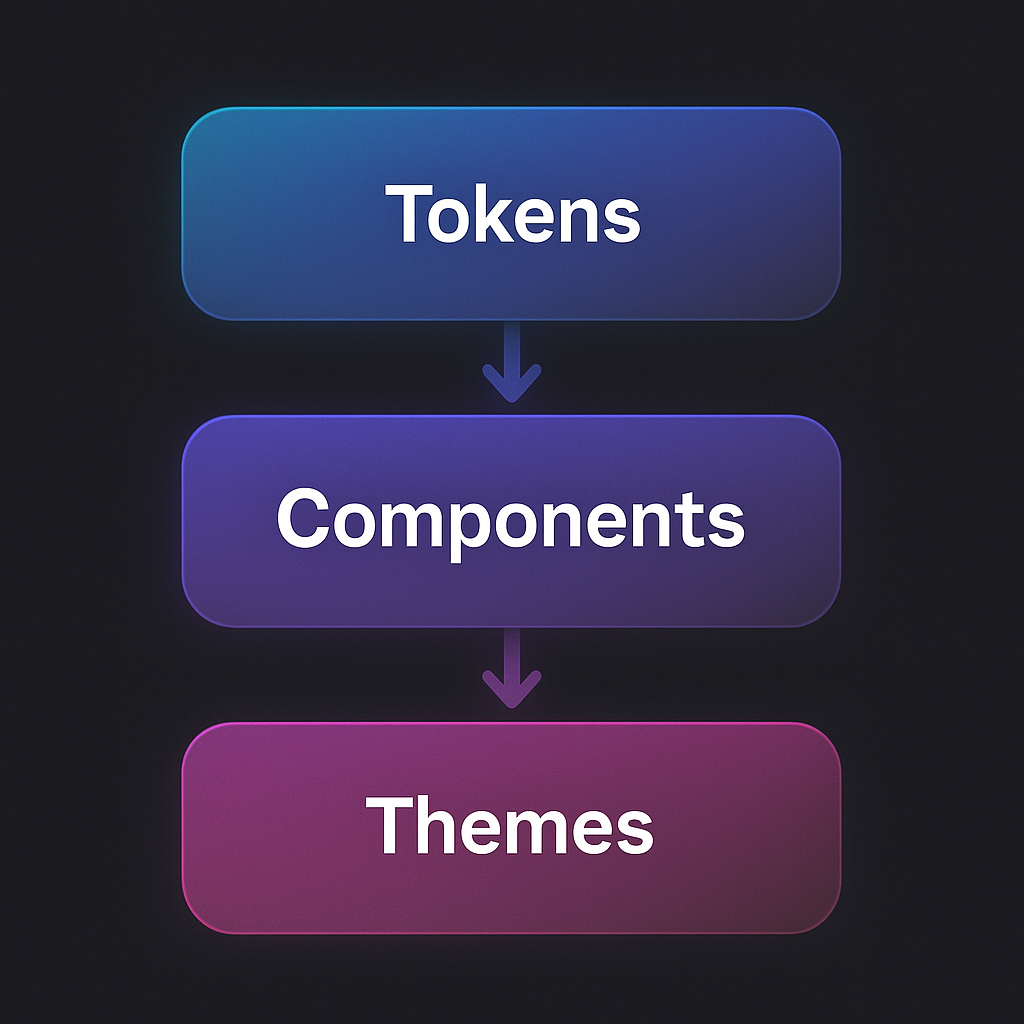
Figure 4. A diagram illustrating versioning relationships between tokens, components, and themes.
This layered strategy allows you to update a theme without breaking components, or to refactor a component while preserving existing tokens. By isolating changes in this way, you can evolve confidently and deploy updates incrementally.
Branching and Forking Token Paths
Figure 5. A branching view showing how tokens evolve for specific modes or platforms.
Sometimes tokens diverge rather than replace each other directly. A color may require a dark mode variant or a mobile specific adaptation. Branching diagrams help visualize these relationships so teams understand intent and avoid duplicating values unnecessarily.
Comparing Legacy and Updated Variants
Figure 6. A comparison tool that shows how legacy and updated token values differ.
Displaying differences between versions allows contributors to quickly assess impact. When onboarding new teams or migrating legacy styles, this type of comparison builds confidence and speeds adoption.
Building Trust Through Change
Versioning builds trust. It creates a sense of safety by assuring contributors that changes are intentional, documented, and reversible. Designers can explore new ideas without destabilizing current work, and product teams can plan with confidence knowing that updates will not cause regressions.
A design system earns adoption not only by what it offers but by how predictably it evolves. Versioning is the mechanism that provides this stability.
When versioning is visible and well documented, teams align more easily. Changes stop feeling disruptive and instead become part of a rhythm that drives system maturity.
Monitoring and Governance
A strong versioning strategy is supported by monitoring and governance. Dashboards, automated alerts, and audit logs keep contributors informed of deprecated tokens still in use or themes that require updates. Governance is not about adding friction. It is about creating visibility and maintaining standards as your system scales.
Recap and What Comes Next
Versioning is not just a release process. It is a long term protocol for managing change. By versioning tokens, components, and themes, you create a system that grows without losing its integrity. Every update becomes an opportunity for improvement rather than a source of risk.
You now have the foundation for sustainable evolution. Next, you will move into the Contribution Guide. There you will learn how to submit updates, document decisions, and ensure that every addition strengthens rather than weakens the system. Contribution is where versioning meets real collaboration, creating a knowledge base that is alive, reliable, and always ready for the future.